7 min read
Drone Rules in the Dominican Republic for Commercial Shoots
Commercial drone work in the Dominican Republic requires authorization and respect for airspace. This guide explains the general picture so you can plan a shoot with realistic expectations.
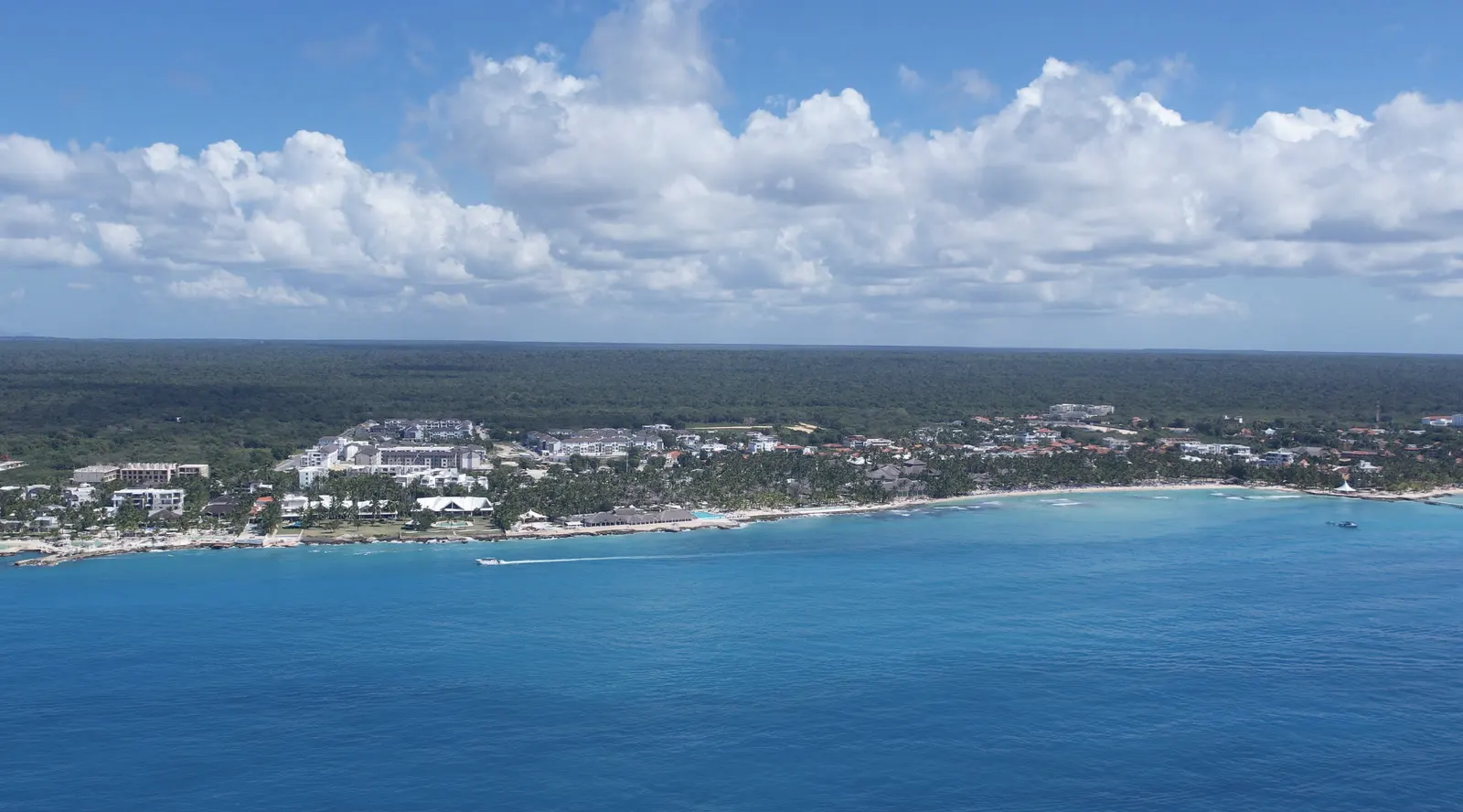
A note before you read
This is a general guide for marketing teams and property owners. It is not legal advice, and regulations change. Always confirm current requirements with the Instituto Dominicano de Aviación Civil (IDAC) and the relevant authorities, or work with an operator who handles authorization for you.
We keep the guide general on purpose. Specific forms, fees, altitude limits and processing times should be checked at the source at the time of your project.
Why drone rules exist
Drones share airspace with passenger aircraft, helicopters and light planes. The East Coast has an international airport, resort helipads and private aviation, so rules focus on separation, safety and privacy.
For marketing teams, the practical result is simple: a drone shot should be planned as part of a production, not decided on the day.
Commercial use needs authorization
In the Dominican Republic, flying a drone for commercial purposes, such as filming a hotel for promotion, a listing for sale or a paid project, is regulated by the civil aviation authority, IDAC. In general, commercial operations require authorization, and operators are expected to follow its rules on registration, operation and safety.
Recreational flying is treated differently from commercial work. If you are being paid to fly, or the footage will be used for marketing, assume commercial rules apply.
When hiring a studio or operator, ask whether they hold the relevant authorization and how they handle permits per location. A professional will answer directly and without hesitation.
Airspace near Punta Cana International Airport
Punta Cana International Airport (PUJ) is a busy international airport, and airspace around airports is controlled. Flying near an airport without permission is dangerous and may be illegal.
Some well-known areas of Bávaro, Cap Cana and Punta Cana Village sit within the airport’s zone of influence. Whether you can fly in a given spot depends on distance, altitude and clearance. This is something to check early in planning, because it can decide whether a shot is possible.
Other areas, such as Uvero Alto, Macao or parts of La Romana, face different constraints. They may be farther from the main airport but have their own local airfields or restrictions.
Property permission and privacy
Even where the airspace is open, you need permission from the owner or managing entity of the property you are filming. For hotels, that is usually the general manager or marketing director. For gated communities and developments, there may also be an association or developer to ask.
Respect privacy. Flying over neighboring villas, beaches with guests or private pools can cause complaints and may expose you to liability. Plan flight paths that avoid identifiable people, and be prepared to explain why you are flying.
Public access to a beach does not mean drone use there is unrestricted. Local operators, resorts and authorities may have their own rules.
Practical rules most operators follow
Beyond authorization, responsible commercial operators follow common safety practices. These are general norms, not a replacement for the law.
- Keep the drone within visual line of sight of the pilot
- Stay below the maximum altitude that applies to the zone
- Do not fly over crowds, roads with traffic or people not involved in the shoot
- Keep away from helipads, airfields, power lines and emergency operations
- Check weather, wind and battery limits before every flight
- Ask for proof of insurance suited to commercial drone operations
- Keep a flight log
Weather, wind and coastal conditions
The East Coast is windy for much of the year, and trade winds can make the sea breeze strong by midday. Early morning and late afternoon are generally calmer and also better for light.
Salt and humidity are hard on equipment. Operators who work on the coast manage this with maintenance and spare gear, and they build weather days into schedules.
Plan a backup window. A good schedule includes the primary shoot and a second option, so that one gust of wind or shower does not cost you the project.
How to plan an aerial shoot step by step
The simplest approach is to treat drone permissions as part of preproduction. Here is a sequence that works for most projects.
- Define the shots you need and why: location context, property scale or a cinematic opener
- Share the exact address or coordinates with your operator
- Ask the operator to check airspace and authorization requirements
- Obtain written permission from the property owner or manager
- Inform neighbors, security and community management if needed
- Schedule primary and backup windows
- Brief the crew on safety zones and the shot plan
- Review the footage and keep a record of permissions and flight logs
When a shot is not possible
Sometimes the answer is no. A property may be too close to the airport, within a restricted area or without owner permission. A good operator tells you early and offers an alternative.
Alternatives include ground-level wide shots, elevated positions such as rooftops and cranes, a pole or mast camera, or using licensed stock only when clearly labeled and appropriate. Be careful never to present a substitute as footage of your property.
Common mistakes to avoid
The most common mistake is deciding on the day. A marketing team falls in love with an aerial shot during a hotel walk-through and asks the crew to fly it on the spot. If the airspace is restricted, the authorization is missing or the owner has not agreed, the answer has to be no, and everyone loses time.
The second is treating all locations alike. A villa in a quiet inland development, a beachfront resort near the airport and a catamaran dock each carry different constraints. Plan each location on its own merits.
The third is hiring on price alone. An operator who cuts corners on authorization, insurance or weather planning puts your brand, your property and your guests at risk. A slightly higher quote from a team that plans properly is usually the cheaper outcome.
Questions to ask before hiring
Use these to judge whether an operator can deliver safely and legally.
- Do you hold commercial authorization for drone operations in the Dominican Republic?
- How do you check airspace for the location of my property?
- Who obtains permissions, and what do you need from me?
- What is your plan if weather or restrictions block the shoot?
- Do you carry insurance, and what does it cover?
- Can you share a flight log or authorization record on request?
Questions
Do I need a permit to fly a drone for a hotel video?
In general, commercial drone use requires authorization from IDAC. Confirm current requirements for your project.
Can I fly near Punta Cana airport?
Airspace near PUJ is controlled. Flights may be restricted or require specific clearance.
Do I need the owner’s permission?
Yes, before filming a private property or flying over it.
For aerial work planned and flown with authorization in mind, see our drone videography service.
DroneStart a project
Need aerials for a project?
A few details and we will come back with questions, a rough approach and a quote. Replies in English or Spanish.